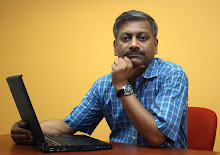
To many of us Khushwant Singh looks and writes like a sordid and perverted sardar. To me though he is the greatest living "Indian Writer In English". Not because he is a very powerful man, not because his father was one of the richest men in Delhi, not because he is the most erudite Indian alive, not because he is so alive and acive till this day, not because he is well off enough to have great friends in Delhi and a house in Kasauli for his summer retreats. Not because of none of these. But for these reasons:
1. He writes the best english in all five continents, even though he is a humble Indian and a sardar to boot. All of us thought good Indian english was the prerogative of Bongs and Southies.
2. His one book "A Train to Pakistan: should have won him a nobel in English literature, just that he never knew ho to lobby
3.He is the most fearless anti establishment thinker for four generations now
4. He still thinks and has not gone senile and we should congratulate his mild drinking for this.
5. His children are by our standards better than him intellectually and in terms of achivements, but they will never admit to this. That is like a great father: when you children feel humbled by you.
What can I say to that great man, but may you have may lives and live forever:)
Tuesday, August 07, 2007


Wednesday, August 01, 2007
A Woman President
Unlike most civilisations, we have really complicated kinship terms. For example we do not have simple uncles but complicated mamas, chachas, mausas and buas [all by the way first uncles from mother's and fatehr's side. Likewise for aunts we have mami, chachi, mausi and so on. Kinship terms run so deep in our society that we still sometimes follow the ancient system and call all our father's male siblings "father" in order that they were born relative to the biological father. Thus "bade Papa", "Majhley Papa" and "Chote Papa", Papa and Chacha. if you do not belong to this cultural milieu you would get perplexed trying to figure out who the biological father is, but not so a discerning Indias.
In fact, kinship terms are the first things we teach our chidren after they have learnt to say papa and mamma. It is long process of training and takes upto 10 years for the child to understand and then correctly apply these terms. After all it would be darn insensitive to get this wrong - in fact to address your mami as mausi would make the entire family incestuous.
With so much of training and such finely tuned kinship terms, I was damned surprised when the entire nation started tearing their hair on the latest issue of what would be a female president of India be called. The Presidents have always been men and we have called him Rashtra-Pati [husband to the nation, literally. Though is slightly more complicated that just husband].
Some suggested the obvious, she be called Rashtra-Patni [wife to the nation]. This would make the plight of the Madam President worse than Draupadi, we are a nation of 1.2 billion half of which is our male population. Others, although realising the need to come up with the correct term, kept quiet since Rashtra-Patni was too embarrassing a term to be attached to the first Woman President.
I think, all of us got it wrong and I think I am the first one to crack this. Hear me out on this one and you will soon realise that I am right.
Rashtrapati is so called not just because he is male, but because our rashtra - bharat - is a female. We call it the motherland. Hence the Head of the Sate is called Rashtrapati - Pati [husband] of the state. Now if the nationstate is a female [mother] then isn't it so easy to find a kinship term for a female president?
I think if you are true to our tradition of kinship names a woman president should be called Rashtra-Sautan [sautan again is much more complicated than the simple anthropological term co-wife], but it is the correct term.
Rashtra-patni should correctly be reserved for a woman president in a country which styles ifself as a fatherland - by that standard the only true Rashtra-Patni is Angela MERKEL of Germany.
I hope you will agree with me.
Saturday, July 28, 2007
Mahabalipuram
 I had seen the images since I was a kid and also remembered that they were really reall old. Later of course, I ead much more about them and finally yesterday I was able to visit Mahabalipuram and was able to see with my own eyes the work of Pallava sculptors 600-700 AD. The village of Mahabalipuram is a World Heritage Site because of these ancient monuments. It also helps that the beach extends to as far as the eye can see on both sides and the sea is really blue. It was a great day's outing rounded up with a lunch at GRT resort. For the first time in my life I felt jelous about Chennaites. Pity I could not enjoy the beach, which seemed to me to be exgtending from the outskirts of Chennai to probably the southernmost tip of India without a break. Incredible India!
Monday, July 16, 2007
Deluge in Delhi
For those who believe that good and bad are relative terms, please read on. It rained in Delhi for an hour. It was a Sunday afternoon and after a week of high humidty and temperature rains were a welcome change. But for those who had to travel and for those who have some experience of living in Mumbai! I unfortunately qualified for both the categories. The eight km journey through the city to the railway station took me forty minutes on a Sunday afternoon on Delhi roads. Both sides of the roads were flooded and traffic could move only on the inner lanes of what are usually six lane roads. The entry to the New Delhi Railway station was in knee deep water and the site was more like a third world Venice than that of the capital of an aspiring nation. The two municipal bodies of Delhi have long ago abdicated their civic responsibilities and are engaged politicking, most of the work is outsourced to contractors although there are scheduled departments and workers for all the jobs. So it has been an excellent case of outsourcing without cutting back on internal staff [a situation Americans would have loved].
For once, I felt happy that I was returning to Mumbai. I of course with the typical survival instict of a Delhiite manged to board my train on time. Others I left behind were not so lucky. My neoghbourhood in Delhi was hit by a cable fault which was temporarily repaired late at night.
As my train sped away from Delhi, I was wondering what would happen if it rained for two days in Delhi. Thankfully mother nature has been very kind to Delhi and it is unlikely that it would ever rain as hard as in Mumbai and Kolkata. This would of course, leave the municipal officers in Delhi enough time to do what they do best - petty politics.
Subscribe to:
Posts (Atom)